

Introduction
AI productivity tools are changing the way people work, learn, manage projects, and organize daily tasks. From students and freelancers to business owners and remote teams, these tools help users save time and improve efficiency without needing advanced technical skills. Modern workflows often involve repetitive activities such as writing emails, scheduling meetings, analyzing data, creating reports, or organizing documents. AI-powered solutions simplify these activities and allow users to focus on more valuable and creative work.
Many beginners feel confused when choosing the right tools because there are hundreds of options available online. Some platforms focus on writing assistance, while others specialize in automation, collaboration, analytics, design, or communication. Understanding how these tools function is important before integrating them into your daily workflow. The right setup can reduce stress, improve concentration, and increase productivity significantly.
Businesses also use AI productivity tools to improve teamwork and decision-making. Employees can automate repetitive processes, track progress, and complete projects more efficiently. As technology continues evolving, these tools are becoming more affordable and easier to use for individuals and small companies.
What is AI Productivity Tools?
AI productivity tools are software applications powered by artificial intelligence that help users complete tasks faster and more accurately. These tools use machine learning, automation, natural language processing, and smart algorithms to improve workflow and reduce manual effort.
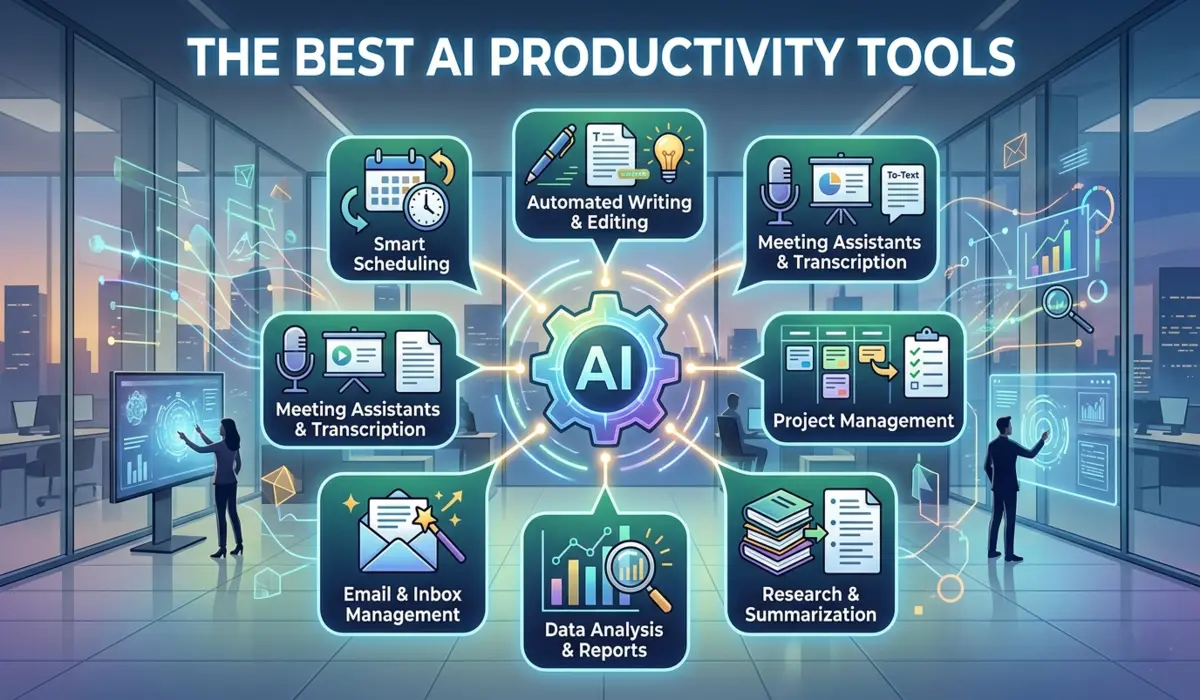
They can perform a wide range of functions, including:
- Writing and editing content
- Managing schedules and calendars
- Organizing files and documents
- Automating repetitive tasks
- Generating reports and summaries
- Assisting with customer support
- Improving team collaboration
- Tracking goals and deadlines
For example, a content writer can use AI productivity tools to create outlines, improve grammar, and organize research notes. A business owner may automate customer emails and task management. Students can use these tools to summarize notes, manage assignments, and improve study plans.
The main goal of AI productivity tools is not to replace human work. Instead, they help users work more efficiently by reducing repetitive activities and improving focus.
Why is AI Productivity Tools Important?

AI productivity tools are important because modern work environments are becoming faster and more demanding. People often manage multiple tasks at the same time, which can lead to stress, confusion, and lower productivity. These tools simplify workflows and help users stay organized.
One major advantage is time savings. Instead of spending hours on repetitive work, users can automate basic processes and focus on strategy, creativity, or decision-making.
Another reason these tools matter is accuracy. AI-powered systems can reduce errors in writing, calculations, scheduling, and reporting. This improves work quality and minimizes costly mistakes.
Remote work has also increased the importance of digital productivity solutions. Teams working from different locations need better communication and project management systems. AI productivity tools improve collaboration by organizing tasks, tracking deadlines, and streamlining communication.
Students and beginners also benefit from these tools because they make learning easier and more structured. Many applications offer smart recommendations, summaries, and organizational features that improve focus and learning speed.
As competition increases across industries, productivity has become essential for success. People who use AI productivity tools effectively can often complete more work in less time while maintaining better quality.
Detailed Step-by-Step Guide
Step 1: Identify Your Productivity Challenges
Before choosing any tool, identify the areas where you lose time or struggle with organization. Some people have difficulty managing emails, while others struggle with scheduling, writing, or collaboration.
Create a list of your biggest productivity problems. This helps you select tools that solve real issues instead of downloading unnecessary applications.
Examples include:
- Spending too much time replying to emails
- Forgetting deadlines
- Difficulty organizing files
- Slow content creation
- Poor team communication
- Repetitive administrative work
Understanding your challenges helps you build a more effective workflow.
Step 2: Choose the Right Type of Tool
Different AI productivity tools serve different purposes. Selecting the correct category is important for long-term success.
Popular categories include:
Writing and Content Tools
These tools assist with grammar correction, idea generation, summarization, and editing.
Task Management Tools
These platforms help users organize projects, deadlines, and daily activities.
Automation Tools
Automation software connects apps and performs repetitive tasks automatically.
Meeting and Communication Tools
These applications improve collaboration, scheduling, and note-taking.
Data and Analytics Tools
These tools analyze information quickly and provide useful insights.
Choose solutions based on your goals instead of using too many applications at once.
Step 3: Start With Free Versions
Many beginners make the mistake of purchasing expensive subscriptions immediately. Start with free plans to test usability and compatibility.
During the testing phase, evaluate:
- Ease of use
- Speed and accuracy
- Integration with existing apps
- Customer support quality
- Workflow improvements
Testing multiple tools allows you to compare features before investing money.
Step 4: Learn Basic Features First
Avoid trying every feature on the first day. Focus on the core functions that improve your daily workflow.
For example:
- Learn how to organize tasks
- Set reminders and deadlines
- Automate simple repetitive actions
- Use templates and shortcuts
- Explore reporting features gradually
Learning slowly prevents confusion and increases long-term adoption.
Step 5: Integrate Tools Into Your Workflow
AI productivity tools work best when integrated properly into existing routines.
For example:
- Connect calendars with scheduling software
- Link task management apps with communication platforms
- Sync cloud storage with project tools
- Automate email notifications and reminders
Integration reduces manual work and improves efficiency.
Step 6: Track Productivity Improvements
Measure your progress after implementing new tools.
Track factors such as:
- Time saved each week
- Tasks completed faster
- Reduced errors
- Better organization
- Improved communication
This helps you determine whether the tool is delivering real value.
Step 7: Avoid Tool Overload
Using too many applications can reduce productivity instead of improving it.
Focus on a small number of reliable tools that work well together. Too many notifications, dashboards, and systems create unnecessary distractions.
Simplicity often produces better long-term results.
Step 8: Update Skills Regularly
AI technology evolves rapidly. New features and updates appear frequently.
Spend time learning:
- New automation methods
- Advanced shortcuts
- Workflow optimization strategies
- Integration options
- Security features
Continuous learning helps users maximize the value of AI productivity tools.
Benefits of AI Productivity Tools
AI productivity tools offer several advantages for individuals, students, freelancers, and businesses.
- Save time by automating repetitive tasks
- Improve organization and task management
- Increase focus on important work
- Reduce human errors in daily operations
- Improve communication and collaboration
- Simplify scheduling and planning
- Enhance creativity and brainstorming
- Help teams manage projects efficiently
- Improve workflow consistency
- Support remote work environments
- Reduce stress caused by disorganization
- Provide faster access to information
- Improve customer service response times
- Assist with content creation and editing
- Help businesses scale operations efficiently
These benefits make AI productivity tools valuable across many industries and professions.
Disadvantages / Risks
Although AI productivity tools provide many advantages, users should also understand potential risks and limitations.
- Overdependence on automation may reduce critical thinking
- Some tools may produce inaccurate information
- Privacy concerns can arise with cloud-based platforms
- Premium subscriptions may become expensive over time
- Excessive automation can reduce personal creativity
- Learning advanced features may require time
- Too many tools can create workflow confusion
- Technical problems may interrupt work processes
- Data security risks exist if platforms are not trusted
- Some tools require stable internet connections
- Automated recommendations may not always fit specific needs
Being aware of these risks helps users make smarter decisions.
Common Mistakes to Avoid
Many people fail to improve productivity because they use tools incorrectly. Avoiding common mistakes can help you achieve better results.
Using Too Many Tools
Trying multiple platforms simultaneously often creates confusion. Focus on essential tools first.
Ignoring Training and Tutorials
Many users never learn advanced features that could save significant time.
Expecting Instant Results
Productivity improvements take time. Consistent use and optimization are necessary.
Choosing Tools Based Only on Popularity
A popular tool may not match your workflow. Always prioritize personal needs.
Forgetting Data Security
Avoid storing sensitive information on unreliable platforms.
Relying Entirely on Automation
Human review remains important for quality control and decision-making.
Not Updating Workflows
Technology changes rapidly. Failing to adapt limits productivity improvements.
FAQs
What are the best AI productivity tools for beginners?
Beginners should start with simple tools that focus on task management, writing assistance, scheduling, and note organization. User-friendly interfaces and free plans are ideal for learning basic workflows.
Can AI productivity tools replace employees?
No, these tools are designed to support human work rather than replace it completely. They automate repetitive tasks while allowing people to focus on creative thinking and decision-making.
Are AI productivity tools expensive?
Many platforms offer free versions with useful features. Premium plans usually include advanced automation, collaboration, analytics, and integration options.
Are these tools safe to use?
Most reputable platforms use security systems to protect user data. However, users should still review privacy policies and avoid sharing highly sensitive information unnecessarily.
Which industries benefit most from AI productivity tools?
Almost every industry can benefit, including marketing, education, finance, healthcare, customer service, software development, and remote collaboration.
How can students use AI productivity tools?
Students can organize assignments, summarize notes, manage schedules, improve writing quality, and create better study plans using these tools.
Do AI productivity tools require technical skills?
Most modern platforms are designed for beginners and require minimal technical knowledge. Tutorials and templates make setup easier.
Can small businesses benefit from these tools?
Yes, small businesses can improve communication, customer management, scheduling, and workflow automation without hiring large teams.
Expert Tips & Bonus Points
Experts recommend starting with a clear productivity strategy before using any software. Tools alone cannot solve organizational problems without proper planning.
Here are some expert recommendations:
- Focus on one productivity goal at a time
- Use automation only for repetitive tasks
- Review workflows monthly for improvements
- Keep notifications limited to essential updates
- Store important files in organized cloud folders
- Create templates for recurring tasks
- Combine task management with calendar planning
- Learn keyboard shortcuts to save time
- Use collaboration features for team projects
- Regularly back up important information
Another useful strategy is setting daily priorities. Many people waste time switching between tasks. AI productivity tools can help organize priorities and improve concentration.
Experts also suggest using analytics features whenever possible. Productivity reports reveal how time is spent and identify areas for improvement.
Consistency matters more than complexity. A simple system used daily often performs better than an advanced system used inconsistently.
Conclusion
AI productivity tools are transforming the modern workplace by helping individuals and businesses complete tasks faster, stay organized, and improve efficiency. These tools simplify repetitive work, reduce stress, and create more time for meaningful activities. Whether someone is managing personal tasks, studying for exams, running a business, or collaborating with remote teams, productivity software can significantly improve daily performance.
Although there are some risks, such as overdependence on automation or privacy concerns, these issues can be minimized by using trusted platforms and maintaining human oversight. When combined with strong planning and consistent habits, AI productivity tools become powerful assets for personal growth and professional success.
Technology will continue evolving, and productivity systems will become even smarter in the future. People who learn how to use these tools effectively today will be better prepared for tomorrow’s digital environment. By applying the strategies, tips, and best practices explained in this guide, beginners and intermediate users can build efficient workflows, save valuable time, and achieve better results in both work and daily life.
